
Writing that post and trying to put it into action over the past year has been part of a constant process of unlearning and relearning. As a non-Black person raised in a country founded on white supremacy, I know I have so much more unpacking and unlearning to do. I say this as someone who for decades wanted to run for office, as someone who believed in American exceptionalism and meritocracy and equality of opportunity, as someone who has benefitted from the model minority myth (to the extent that East Asians are most privileged from the ways our diasporas are consolidated into one monolith) and by extension, from my complicity in anti-Blackness.
My identities as a queer and genderqueer non-Black person of color and child of immigrants don’t exempt me from my class privilege or relative race privilege or from benefitting from anti-Blackness.
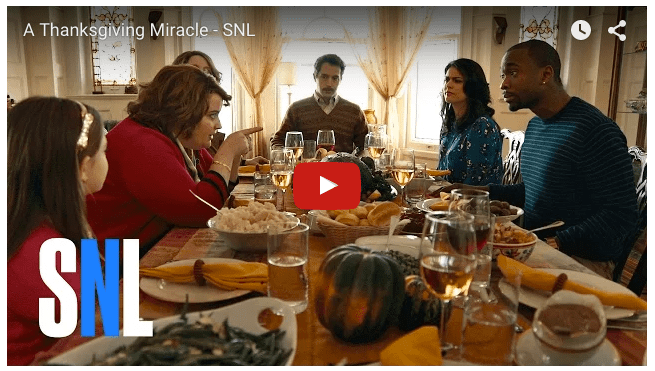
Ok, so maybe Thanksgiving dinner is not the time when you’re going to your racist Aunt Sally/Zhang Ahyi. And often, Thanksgiving is already a traumatic experience. As I said last year, Thanksgiving is a hard time for a lot of reasons — how do indigenous folks commemorate a holiday that literally celebrates the attempted genocide of their people? For queer and trans folks who have been cut off from their families, what table do we sit down around? For folks who don’t have access to class privilege or the ability to support themselves financially or other systems of support, being cut off from family is dangerous and violent.
That may be the case for you, and I am not here to make judgment statements on what your activism should look like or how you approach social justice, but my point is that letting these comments go unchecked is a choice, and when you are not a member of the oppressed group being targeted, being able to turn away from these conversations is a privilege.
It’s hard enough to go into these dinners, but it helps to think through these conversations ahead of time. Some guiding questions:
- What are my stakes in this conversation? What comments am I not going to let go by unchecked?
- What are the consequences of letting those comments slide? (Are there youth present who will hear and internalize these comments, without seeing anyone offer a counter narrative? Will you regret not having said anything to defend your friends, loved ones, chosen family, whether or not they were present?)
- What topics are likely to come up, and is it possible to plant a seed of noting your discomfort, so that you can have a follow-up conversation later?
And let’s face it. Fighting for our liberation is not just about saying the right things — reductionist critiques of political correctness focus on this idea that SJWs are saying some words are bad and can never be used. It’s not just the words — finding different words to say the same harmful things and uphold the same systems of oppression is nothing new. (See, for example, the use of “thug.”)
This work is about changing people’s perspectives and shifting things for long-term change. For folks who are giving themselves an ally label, do the work at home. We can’t just dismiss people because they’re old or they’ve always been that way; things “always being that way” is what has brought us to the present day.
hello from the other siiiiide
I must have tried a thousand timesto tell you that’s racist, everything that you’ve saidbut when I comment you never seem to take accountability for your facebook posts
Think about what it means to turn away. We are not on the other side of this. As Shaun King laid out, “more unarmed Black folk have been killed by police THIS YEAR than were lynched in any year since 1923.” Armed white supremacists in bulletproof vests fired upon peaceful protestors in Minneapolis, and then walked away from a crowd full of police. The KKK has been openly recruiting in Portland and surrounding cities, where police also put up a billboard saying “Having enough police matters,” directly across from a church that has been displaying a #BlackLivesMatter banner. Shooting an unarmed Black person doesn’t lead to jail time, but protesting these murders by police does. Police have literally been targetting and arresting Black organizers who are leading protests and direct actions.
Across the country (and in other nations), Black organizers are drawing attention to the open war on Black folks in this country.
Having “a conversation about race” is not enough, by far. But right now, we as non-Black folks, need to take on the labor of these conversations in our own communities, with our own families.
 audrey kuo